Best Cat GPS Trackers of 2026: Honest, Research-Based Picks
Best cat GPS trackers of 2026 compared on range, battery, weight, and subscription cost — honest, research-based picks for indoor and outdoor cats.
📖 Table of Contents
Affiliate Disclosure: As an Amazon Associate, we earn from qualifying purchases. This comes at no extra cost to you and helps support our independent testing and reviews. We only recommend products we genuinely believe in.
As an Amazon Associate we may earn a commission from qualifying purchases made through links on this page, at no extra cost to you.
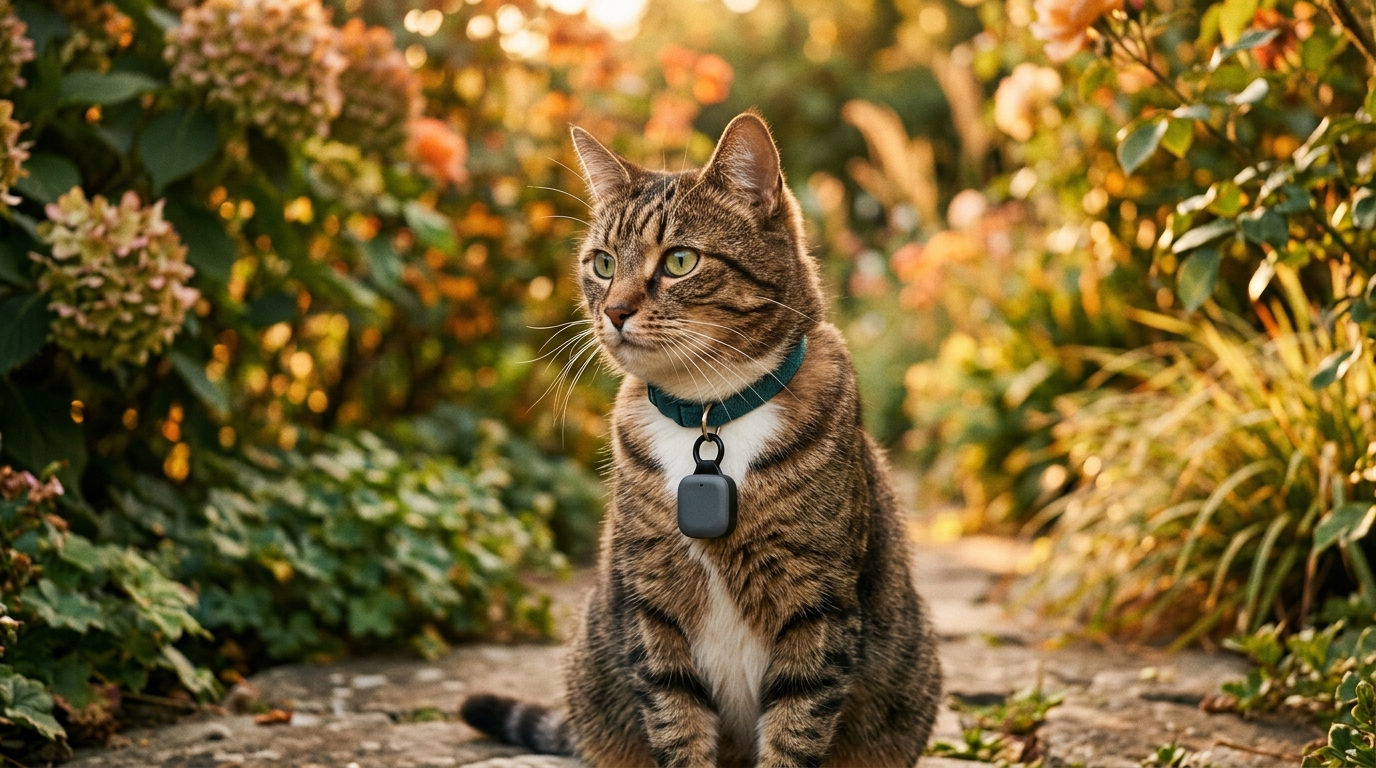
Cats are stealthy, athletic, and curious — a combination that turns an open door or a torn window screen into a genuine escape risk. A GPS tracker will not keep your cat from slipping out, but it can shrink the window of panic between “she’s gone” and “she’s under the porch” from hours to minutes. For indoor-outdoor cats and adventure cats that join you on hikes, some form of location tracking is one of the cheapest peace-of-mind upgrades you can buy.
The catch is that the market is full of devices sold as “GPS trackers” that aren’t really GPS at all. Before you spend anything, it helps to understand what each technology actually does — and what it can’t do. This guide is a research-based comparison: we analyzed published specifications, manufacturer documentation, guidance from feline-welfare organizations, and aggregated owner feedback from retail listings and forums. We did not hands-on test these devices, and we are upfront about that.
The one distinction that matters more than anything else
Nearly every “pet tracker” falls into one of two technology camps, and mixing them up is the most expensive mistake buyers make.
True GPS + cellular trackers (Tractive, Cube, Jiobit) contain a real GPS receiver plus a cellular (usually LTE-M) radio. They determine the cat’s location from satellites and then send it to your phone over a cellular network, the same way your phone shares its own location. This gives you genuine live tracking over effectively unlimited range — anywhere there is cell coverage. The trade-off is that they require a monthly or annual subscription, because each device is essentially a tiny phone with a data plan.
Bluetooth crowd-find tags (Apple AirTag, Tile) have no GPS and no cellular radio. They broadcast a short-range Bluetooth signal and rely on other people’s phones passing nearby to anonymously report their location back to a network. They cost less up front and have no subscription, but they can’t tell you where your cat is in real time — only where a stranger’s phone happened to be near it at some point. If your cat is hiding in a field with no foot traffic, these tags go silent.
There is a third, smaller category of radio-frequency (RF) directional trackers — the kind with a handheld receiver that beeps louder as you get closer. They need no subscription and no cell network, but range is limited to a few hundred meters and you’re doing the searching yourself. We focus this guide on GPS/cellular and Bluetooth options, which cover the overwhelming majority of cat owners’ needs.
How we evaluated these trackers
We weighed each option against the criteria that actually matter for a cat:
- Weight and size, because cats tolerate collar devices far less than dogs, and a heavy tracker will be removed or cause gait changes.
- Collar safety, because any device must be worn on a breakaway collar that releases under strain — International Cat Care is emphatic that cats should never wear non-release collars, which can snag and cause serious injury.
- Range and live-tracking capability, meaning whether the device reports a true, real-time GPS position or only a Bluetooth approximation.
- Ongoing subscription cost, since the sticker price of a cellular tracker is a small fraction of what you’ll pay over two years.
- Battery life and recharge burden.
- Waterproofing and durability for outdoor use.
- App quality and feature set (virtual fences, escape alerts, location history).
With that framework in mind, here is how the leading options stack up.
| Tracker | Technology | Subscription? | Best for |
|---|---|---|---|
| Tractive GPS Cat | GPS + LTE-M cellular | Yes | Best overall for outdoor cats |
| Apple AirTag | Bluetooth / Ultra Wideband (Find My) | No | Indoor cats in Apple-heavy areas |
| Cube GPS | GPS + LTE-M cellular | Yes | True-GPS alternative, flexible plans |
| Jiobit by Life360 | GPS + cellular + Bluetooth | Yes | The smallest real-time tracker |
| Tile Pro | Bluetooth only | No | No-subscription budget pick |
The picks
Best overall: Tractive GPS Cat
Tractive is the only major tracker built and marketed specifically for cats rather than scaled down from a dog product. It pairs a GPS receiver with an LTE-M cellular radio to deliver genuine live tracking with effectively unlimited range within its covered countries, and Tractive lists coverage in more than 175 countries. The device is rated IPX7 waterproof, lets you draw virtual fences that ping you the moment your cat leaves a defined area, and keeps a location-history trail.
The honest trade-off is the subscription — Tractive requires a monthly or annual plan to pay for the cellular data, and pricing varies by plan and region, so check the current rate on their site. For an indoor-outdoor or adventurous cat where you need to know where they are right now, not where they were, it is the category leader. Pair it with a lightweight breakaway collar (the device attaches to most collars) and you have a complete setup.
- Pros: True live GPS tracking; purpose-built for cats; unlimited range within covered countries; virtual fences and escape alerts; location history; IPX7 waterproof.
- Cons: Requires a paid subscription; needs cell coverage to report a live position; needs regular charging.
- Best for: Indoor-outdoor cats, adventure cats, and any owner who needs real-time location.
Check Tractive GPS Cat pricing on Amazon
Best no-subscription option for indoor cats: Apple AirTag
The Apple AirTag is not a GPS tracker, and pretending otherwise does owners a disservice. What it is: an approximately $29 Bluetooth and Ultra Wideband beacon that leverages Apple’s Find My network — hundreds of millions of Apple devices that silently relay its position. It runs about a year on a user-replaceable CR2032 coin-cell battery, weighs roughly 11 g, and has no subscription, ever.
For a strictly indoor cat, or an indoor-outdoor cat in a dense suburb or city where iPhones are everywhere, an AirTag tucked into a silicone collar holder is a genuinely useful, cheap insurance policy: if the cat slips out, you’ll likely get a location ping from a passerby’s phone within minutes. What you will not get is guaranteed real-time tracking, a position when the cat is somewhere with no foot traffic, or any kind of escape alert. The AirTag is also larger than purpose-built cat trackers, so fit matters.
- Pros: Low one-time cost; no subscription; ~1-year battery; enormous Find My network; precise “Precision Finding” up close on supported iPhones.
- Cons: No real GPS; no live tracking; depends on nearby Apple devices; relatively bulky for a cat; requires a separate collar holder.
- Best for: Indoor cats and close-to-home cats in populated areas.
Check Apple AirTag pricing on Amazon
Best true-GPS alternative: Cube GPS
If you want the unlimited-range, live-tracking capability of Tractive but prefer a different brand or plan structure, Cube’s GPS tracker is the standard alternative. Like Tractive, it combines a GPS receiver with a cellular radio to report a real-time position to a phone app, with location history and alerting. Cube offers flexible, cancel-anytime cellular plans, which suits owners who want tracking seasonally — summer outdoor months or a hiking trip — rather than year-round.
The same caveats apply: cellular service is the whole point, so there is a recurring fee, and the device needs periodic charging. Cube’s hardware has historically been a touch larger than the latest cat-specific options, so confirm current dimensions against your cat’s size and collar before committing.
- Pros: True GPS live tracking; flexible cellular plans; app-based alerts; location history.
- Cons: Subscription required; verify size and weight for smaller cats; needs cell coverage.
- Best for: Owners who want genuine GPS tracking with a flexible plan rather than a long subscription.
Check Cube GPS pricing on Amazon
The smallest real-time tracker: Jiobit by Life360
Jiobit — now part of Life360 — built its reputation on being extraordinarily small and light, which is exactly the trait cat owners care about most. It layers GPS, cellular, and Bluetooth radios to report a real-time location, and on a Life360 plan it integrates into the same family-location app many people already use. It includes location history and customizable alerts.
Its downside relative to Tractive is that it wasn’t designed for pets first — it is a general-purpose people-and-pet tracker — so you’ll be attaching a small clip-on pod to a cat collar rather than using a pet-native form factor, and the subscription runs through Life360. For a small cat where every gram counts, the size advantage is real.
- Pros: Very small and light; true real-time GPS + cellular tracking; location history; integrates with Life360.
- Cons: Subscription required; not pet-native (clip-on pod); needs cell coverage.
- Best for: Small cats and owners already in the Life360 ecosystem.
Check Jiobit pricing on Amazon
Best Bluetooth-only budget pick: Tile Pro
Tile is the cross-platform answer to the AirTag, and the Tile Pro is its longest-range model, with a Bluetooth reach Tile rates at up to roughly 400 ft (120 m) line-of-sight and a user-replaceable battery. Like the AirTag it has no GPS and no subscription; it leans on Tile’s community-find network, and on supported models the Tile app can also borrow Apple’s Find My network, widening the crowd that can anonymously relay a location.
For a cat, the same limitations apply as with the AirTag — no real-time GPS, dependence on foot traffic, and a relatively bulky form factor — so Tile Pro is best understood as a low-cost, no-fee option for indoor and close-to-home cats, and a reasonable pick for households that aren’t locked into Apple’s ecosystem.
- Pros: No subscription; long Bluetooth range; replaceable battery; cross-platform (works with Android and iOS).
- Cons: No real GPS or live tracking; depends on the crowd-find network; bulky for a cat.
- Best for: Budget-minded, no-fee tracking of indoor cats, especially in non-Apple households.
Check Tile Pro pricing on Amazon
How to choose the right cat tracker
Start with your cat’s lifestyle. A cat that never leaves the apartment has very different needs from one that patrols a territory outdoors. For the strictly indoor cat, a no-subscription Bluetooth tag is usually enough, and the lower cost is a bonus. For a cat that goes outside unsupervised, only a true GPS-plus-cellular tracker gives you the live, anywhere location that an escape scenario demands.
Mind the weight. Cats are far less tolerant of collar hardware than dogs. Look for the lightest device that meets your needs, and watch how your cat moves in the first few days — if they freeze, shake their head repeatedly, or walk with their neck lowered, the tracker is too heavy or poorly fitted.
Use a breakaway collar, always. This is non-negotiable. Any tracker must be worn on a quick-release breakaway collar that snaps open under strain. International Cat Care is blunt that non-release collars can snag on branches or fences and strangle or injure a cat; adding a tracker to a non-breakaway collar only makes that hazard worse. A reputable breakaway collar releases under only a few kilograms of pull force. (Browse breakaway cat collars on Amazon)
Budget for the subscription, not just the device. With cellular trackers, the purchase price is the small part of the cost. Over two years, the subscription often totals several times the hardware price. Compare annual versus monthly billing — annual is usually meaningfully cheaper — and check whether you can pause service.
A tracker is not a microchip. A GPS device has a battery that dies, can fall off a breakaway collar, and can be removed. A microchip is permanent identification that works when a lost cat is delivered to a vet clinic or shelter and scanned. Keep both: the tracker to find your cat quickly, the microchip and an ID tag as a backup if the tracker fails or falls off. According to an ASPCA-backed national survey, roughly 15% of dog and cat guardians had lost a pet over a five-year window, and cats are reunited with their owners less often than dogs — which is exactly the gap a tracker and a microchip together help close.
What about adventure cats?
If you leash-walk or hike with your cat, a GPS tracker pairs naturally with a good harness. A walking harness keeps your cat under physical control, while a cellular tracker is the backup for the moment a spooked cat slips a harness on the trail. For cats that stay in, reducing the urge to bolt in the first place is its own safety measure — a rich environment with enrichment for indoor cats makes dashed-for-the-door escapes far less likely.
The bottom line
For most cat owners who actually need location tracking — meaning an indoor-outdoor or adventurous cat — the Tractive GPS Cat is the strongest choice, because it is the only leading option purpose-built for cats and it delivers true live GPS. The Apple AirTag is the best low-cost, no-subscription option for indoor and close-to-home cats in Apple-heavy areas, as long as you understand it isn’t real GPS. Cube and Jiobit are solid true-GPS alternatives depending on whether you value flexible plans or the smallest possible device, and the Tile Pro rounds things out as a cross-platform, no-fee Bluetooth tag.
Whatever you choose, wear it on a breakaway collar, keep a microchip and ID tag as backup, and set realistic expectations: a tracker is a tool that shrinks your search time, not a substitute for supervision and identification.
Dog Tips, Deals & Gear Guides
Expert buying guides, breed-specific product picks, and honest gear reviews. Plus our free New Puppy Checklist for subscribers.
📬 No spam, ever. Unsubscribe anytime. · Get the free puppy checklist